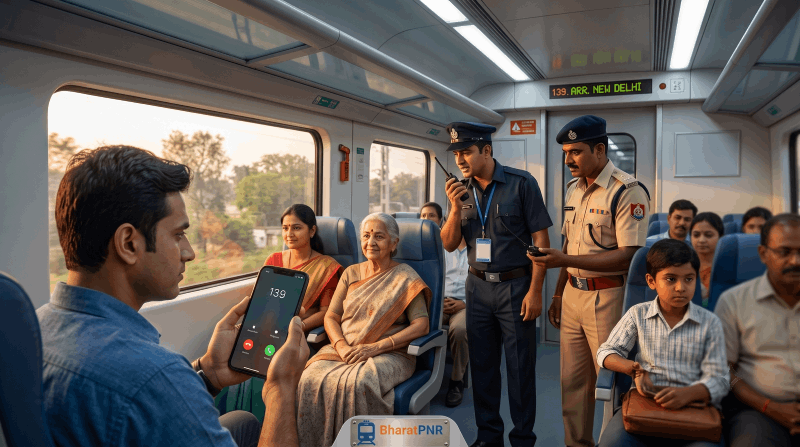
How to Call a Doctor During a Medical Emergency on a Train? Complete Guide
A medical emergency can happen anywhere, including during a train journey. A passenger may suddenly feel unwell, have difficulty breathing, experience severe pain, faint, or need urgent medical attention. When you are inside a moving train, it can be difficult to know where to get help.
The good news is that passengers are not completely on their own during a railway journey. Indian Railways has systems in place to help passengers during medical emergencies, and railway staff can assist in arranging medical attention at stations or through available railway services.
If you or another passenger becomes seriously unwell, the most important thing is to act quickly. Inform the train staff, contact railway authorities through the available railway helpline, and ask for medical assistance at the next suitable station.
Before asking for help, you may also want to keep your journey details ready. You can check your train and booking information using our PNR Status Check tool.
In this guide, we will explain what to do during a medical emergency on a train, how to request medical assistance, how railway staff can help, what information you should provide, and what passengers should avoid doing.
What Should You Do First During a Medical Emergency on a Train?
If someone becomes seriously ill during a train journey, do not wait and hope the problem will go away on its own.
The first step is to inform the train staff immediately. Depending on the train, you can approach the Train Ticket Examiner (TTE), coach attendant, train manager, or other railway staff.
Clearly explain what has happened and tell them that medical assistance is required.
If the passenger is unconscious, having severe breathing difficulty, experiencing serious bleeding, or showing other signs of a life-threatening emergency, ask the railway staff to arrange urgent medical help at the next suitable station.
Can You Call a Doctor While Travelling on a Train?
Medical assistance can be requested during a train journey. Railway staff can help coordinate medical attention for passengers who become ill or injured while travelling.
In many cases, medical assistance can be arranged at a railway station where the train is scheduled to stop. The exact response depends on the emergency, the train’s route, the location of the train, and the availability of medical facilities.
Passengers should therefore inform the train staff as soon as possible rather than waiting until the train reaches the destination.
How to Request Medical Help on a Train
If you are facing a medical emergency, follow these steps.
Step 1: Inform the Train Staff
Look for the TTE, coach attendant, Train Manager, or another railway employee.
Tell them that there is a medical emergency and explain the passenger’s condition as clearly as possible.
If you cannot find railway staff, ask nearby passengers to help locate them.
Step 2: Give Your Exact Coach and Seat Details
Tell the railway staff:
- Train number or train name
- Coach number
- Seat or berth number
- Passenger’s name, if available
- Current condition of the passenger
- Any immediate assistance required
Giving accurate information makes it easier for railway staff and medical personnel to locate the passenger quickly.
Step 3: Ask for Medical Assistance at the Next Suitable Station
Tell the railway staff that you need medical assistance and ask them to arrange for medical personnel at the next suitable railway station.
Railway staff can coordinate with the relevant railway authorities and station personnel so that assistance can be arranged when the train reaches the station.
Step 4: Stay With the Patient
If possible, one person should stay with the patient while another person communicates with railway staff.
Keep the passenger comfortable and follow any instructions given by qualified medical personnel.
What Information Should You Give Railway Staff?
During an emergency, people often panic and provide incomplete information. Try to stay calm and give the most useful details first.
For example, instead of simply saying, “Someone is sick,” explain what is happening.
You can say:
“A passenger in Coach S5, Berth 32 is having difficulty breathing and needs urgent medical assistance.”
This gives railway staff a much clearer idea of what is happening and where the patient is located.
If the passenger has a known medical condition or is taking regular medication, provide that information if you know it.
Can You Use RailMadad for a Medical Emergency?
RailMadad is an Indian Railways passenger service platform through which passengers can raise complaints and requests for assistance.
Passengers can use the official RailMadad service to report issues and request railway assistance. However, in a serious medical emergency, do not depend only on submitting an online complaint and waiting for a response.
Inform the train staff immediately. They can coordinate the response while the train is moving.
If you have internet access, you can also use the official railway assistance channels where appropriate.
What Happens When the Train Reaches the Station?
If medical assistance has been arranged, medical personnel or railway staff may be available when the train reaches the designated station.
The patient can then be assessed and, if necessary, taken to a hospital or medical facility.
The exact process depends on the severity of the condition and the medical facilities available at the station or nearby area.
In a serious emergency, railway staff may coordinate with local medical services to ensure that the passenger receives appropriate care.
What If the Passenger Needs an Ambulance?
If the passenger needs urgent hospital treatment, tell railway staff that an ambulance or emergency medical transport may be required.
Give them the train number, coach number, berth number and information about the passenger’s condition.
Early communication is important because it gives the station authorities more time to coordinate assistance before the train arrives.
If someone has a potentially life-threatening condition, do not delay requesting emergency assistance while trying to arrange everything yourself.
What If I Am Travelling Alone and Have a Medical Emergency?
If you are travelling alone and suddenly become seriously unwell, immediately alert the passengers around you and railway staff.
Do not hesitate to ask other passengers for help. Someone nearby may be able to contact the TTE or coach attendant while another person stays with you.
Keep your phone, identification, ticket and important medical information easily accessible.
If you regularly take prescription medicines, carrying them in your hand luggage rather than in a suitcase is also a sensible precaution.
Keep Your PNR and Train Details Ready
Your PNR and train details can be useful when requesting assistance because they help identify your journey.
If you need to check your booking details quickly, you can use our PNR Status Check tool.
It is also useful to know your coach and berth number. In an emergency, giving these details can help railway staff find you faster.
What Should You Keep in Your Travel Medical Kit?
Passengers who have regular medical needs should carry essential items in their hand luggage.
A basic travel medical kit may include:
- Regular prescription medicines
- Prescription or medication information
- Basic first-aid supplies
- Doctor’s contact details, if needed
- Important medical documents
- Emergency contact information
Do not take new medicines or change prescribed treatment during an emergency unless advised by a qualified healthcare professional.
What Should You Not Do During a Medical Emergency?
A medical emergency can make people panic, but a few mistakes can make the situation worse.
- Do not ignore serious symptoms.
- Do not wait until the destination if the passenger needs urgent medical attention.
- Do not give someone another person’s prescription medicine without appropriate medical advice.
- Do not crowd around the patient unnecessarily.
- Do not move an injured passenger unless it is necessary for immediate safety or directed by qualified personnel.
- Do not hide important medical information from railway staff or medical professionals.
Tips for Staying Safe During a Long Train Journey
A little preparation can make a big difference during a long-distance train journey.
- Keep your regular medicines in your hand luggage.
- Carry enough medication for the complete journey.
- Keep your PNR and train details accessible.
- Note your coach and berth number.
- Stay hydrated during the journey.
- Inform your travelling companion about important medical conditions.
- Keep an emergency contact number available.
- Tell railway staff immediately if a serious medical problem occurs.
Frequently Asked Questions About Medical Emergencies on Trains
1. Can I get a doctor if someone becomes sick on a train?
Yes. If a passenger becomes seriously ill during a train journey, inform the TTE, coach attendant, Train Manager, or other railway staff immediately. They can help coordinate medical assistance at a suitable station.
2. How do I request medical help on an Indian Railways train?
Inform the train staff about the emergency and provide your train number, coach number, berth number and details of the passenger’s condition. Ask them to arrange medical assistance at the next suitable station.
3. Can an ambulance be arranged at a railway station?
When necessary, railway authorities can coordinate with medical or emergency services. Inform railway staff as early as possible so that appropriate assistance can be arranged before the train reaches the station.
4. What should I do if I cannot find the TTE?
Ask nearby passengers or the coach attendant to help locate railway staff. If you have access to official railway assistance channels, you can also use them, but a serious emergency should be reported to train staff immediately.
5. Should I wait until the train reaches my destination?
No. If the passenger has a serious or potentially life-threatening condition, inform railway staff immediately. Waiting for the destination may unnecessarily delay medical treatment.
6. Do I need my PNR during a medical emergency?
Your PNR can help identify your journey, although railway staff may also use your train, coach and berth details. Keeping your PNR and ticket information accessible is always useful.
7. Can I check my PNR while travelling?
Yes. You can use our PNR Status Check tool to check your booking details while travelling, provided you have internet access.
8. What should I carry if I have a medical condition?
Carry your regular medicines, prescriptions or medication information, important medical documents and an emergency contact number in your hand luggage.
Final Words
A medical emergency on a moving train can be frightening, but knowing what to do can help you respond quickly. The first and most important step is to inform railway staff immediately. Give them your coach and berth details, explain the passenger’s condition clearly, and ask them to arrange medical assistance at the next suitable station.
If the passenger needs urgent hospital care, let railway staff know as early as possible so that appropriate medical or emergency assistance can be coordinated.
It is also a good idea to keep your medicines, medical documents, emergency contacts and train details easily accessible throughout your journey.
Before or during your journey, you can check your booking information using our PNR Status Check tool.
Important: This article provides general travel information and is not a substitute for professional medical advice. In a serious or life-threatening situation, seek emergency medical assistance immediately and follow the instructions of qualified medical professionals.